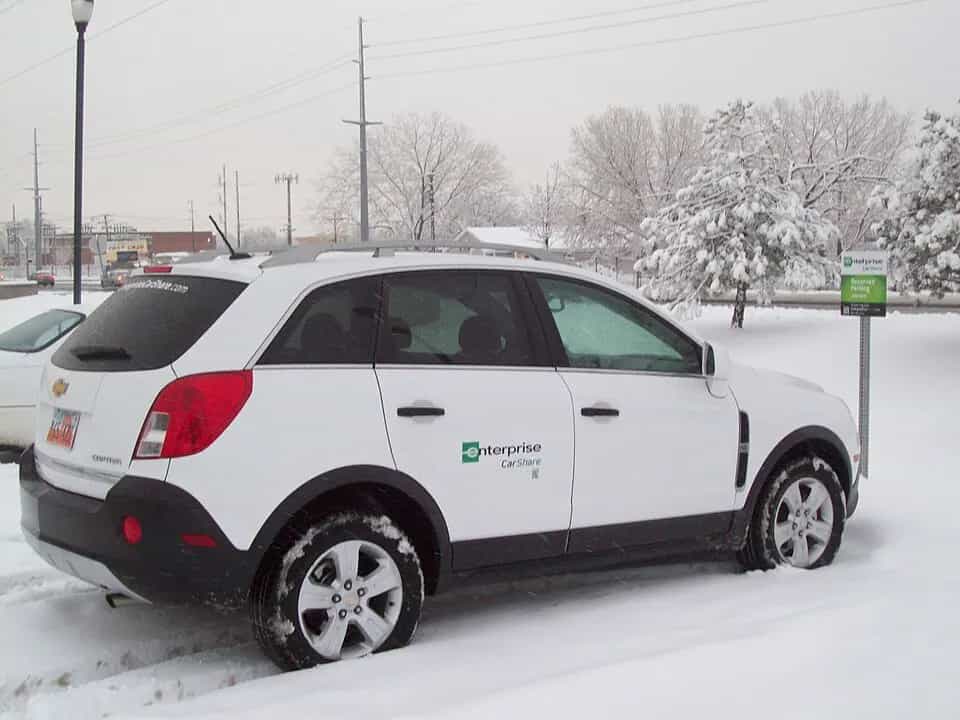
Chevrolet Captiva Sport

Importing a used Chevrolet Captiva Sport from the USA

The Chevrolet Captiva Sport is one of the lesser-known compact SUVs in the American Chevrolet line-up, and that obscurity is exactly why some buyers find it interesting to import. It was sold in the US mainly through fleet and rental channels, which means well-kept, straightforward examples turn up on the used market. USCar Trader operates strictly as an independent broker: we locate the car, verify its history and manage shipping and clearance, without being a dealer or holding stock. For someone who wants a simple, roomy used SUV with GM mechanicals and does not mind a low-profile badge, importing a used Captiva Sport from the USA is a viable, no-nonsense option.

Chevrolet captiva-sport – used car imported from the USA
Photo: An Errant Knight · CC BY-SA 4.0 · Wikimedia Commons

Model history and generations

The US Captiva Sport had a short, specific life, sold roughly from 2012 to 2015. It was closely related to the Opel Antara and the earlier Saturn Vue, sharing GM's Theta platform, and it was aimed at fleets rather than private showroom buyers. Because it was effectively a rebadged, fleet-focused version of a global GM SUV, it changed little across its run — there were no dramatic generational shifts, just year-to-year equipment tweaks. If you are importing one, you are looking at a compact, front-drive-based SUV of the early-to-mid 2010s rather than a modern connected crossover.

Engines and drivetrain

The mainstream US Captiva Sport used a 2.4-litre Ecotec four-cylinder (petrol) producing around 182 hp, paired with a six-speed automatic transmission. A larger 3.0-litre V6 was offered on some earlier or higher trims, adding output for buyers who wanted more pull. Most US cars are front-wheel drive; the platform could support all-wheel drive, but the fleet-oriented US Captiva Sport was predominantly front-driven. This is a conventional, understressed drivetrain with no turbocharging and no hybridisation — part of the car's appeal is mechanical simplicity.

Which trim makes sense

The Captiva Sport is a five-door, five-seat compact SUV. US trims were badged LS, LT and LTZ. LS is the basic fleet specification; LT adds convenience equipment and better trim; LTZ tops the range with leather, upgraded wheels and additional comfort features. Because so many were fleet cars, LS and LT examples dominate the used market, and options were generally kept modest. There is no coupe, long-wheelbase or seven-seat version — it is a single, practical body style throughout.

Supply on the US market

Supply reflects the car's fleet history: many Captiva Sports came out of rental and corporate service, so you will see a spread of mileages, some higher than a private car of the same age. The upside is that fleet cars are often serviced on schedule and mechanically consistent. Condition varies with prior use, so inspection matters more than on a cherished private car. Because the model was discontinued in the US after 2015, everything on the market is now a used, older vehicle, and clean low-owner examples are the ones worth pursuing.

Who benefits from importing

The Captiva Sport suits a pragmatic buyer who wants an affordable, straightforward compact SUV with simple GM mechanics and easy parts commonality with related Opel and Saturn models. It is a good fit for someone who values low complexity and practicality over badge prestige, technology or performance. If you want modern driver-assistance systems, strong efficiency or a refined drive, newer crossovers will serve you better — but as an uncomplicated used family SUV, importing a Captiva Sport from the USA can make sense, provided you buy a well-maintained car.

Technical data

ItemDetail (2.4 LT, typical)
Body styleFive-door compact SUV
PlatformGM Theta (shared with Opel Antara)
Base engine2.4 L Ecotec four-cylinder, approx. 182 hp
Optional engine3.0 L V6 (earlier/higher trims)
Transmission6-speed automatic
DriveFront-wheel drive (mostly)
0-100 km/happrox. 9-10 seconds
Lengthapprox. 4,670 mm
Wheelbaseapprox. 2,705 mm
Boot capacityapprox. 540 litres (seats up)
Kerb weightapprox. 1,650-1,750 kg
FuelPetrol
Seats5
US model yearsapprox. 2012-2015
TrimsLS, LT, LTZ

Known weak points and maintenance

The 2.4-litre Ecotec is a widely used GM engine and, when maintained, is a known and serviceable unit — but it has documented weak points. Timing-chain wear on high-mileage Ecotec engines is the headline concern, sometimes signalled by a rattle on start-up, so a service-history check and a cold-start listen are essential. Oil consumption can appear on neglected examples. The six-speed automatic is generally durable if the fluid was maintained. Because many Captiva Sports were fleet cars, look closely at interior wear and evidence of hard use. As a Captiva Sport common problems summary: timing chain, oil use and general fleet-life wear are the things to verify before you buy.

US and EU spec compared

US cars have amber front side markers, mph-primary instruments and US infotainment and radio provisioning. A rear fog lamp is typically not fitted on US-spec cars and usually needs adding for German approval. Headlight beam patterns follow US rules. The mechanical package overlaps heavily with the Opel Antara sold in Europe, which is a genuine advantage: many service parts are shared, so maintaining a Captiva Sport in Germany is easier than the unfamiliar Chevrolet badge might suggest.

The import process in detail

The sequence is standard: select the vehicle from US listings or auctions; run a VIN and origin check to confirm the build plant and a clean title; secure payment through escrow; arrange inland transport and ocean freight to a European port; clear customs on arrival; complete technical inspection and individual approval (Einzelabnahme) at the TÜV; and register locally. We coordinate every stage as your broker and never add a hidden vehicle margin to the car.

What customs clearance really costs

Remember: no origin proof, no 0% duty – and 19% German import VAT is due on every import.

Keep the two charges separate. The EU import duty on used passenger cars is 0% only with provable US origin, under Regulations (EU) 2026/1455 and 2026/1461, for direct transport until 31 December 2029. The Captiva Sport is a relevant example of why origin must be checked: US-market cars were assembled at GM's plant in Ramos Arizpe, Mexico, so a Mexican-built car does not qualify for the US-origin 0% rate — the standard third-country duty applies instead. The VIN and build documentation determine origin for each individual car, and nothing is duty-free by default. Separately and always, the 19% German import VAT (Einfuhrumsatzsteuer) is charged on the customs value. We never promise a guaranteed rate before verifying the VIN.

TÜV, modifications and registration

Expect the usual homologation items: fitting a rear fog lamp, correcting the headlight beam pattern, addressing the amber side markers, and documenting the odometer in kilometres for the paperwork. On a conventional SUV of this era these are routine tasks. Once the TÜV report is issued and individual approval granted, registration proceeds with your customs clearance and insurance confirmation.

Check before you buy

Before committing, confirm: (1) VIN decode and build plant/origin — important given the Mexican assembly; (2) a Carfax or AutoCheck report for accident, title and mileage history, plus prior fleet/rental use; (3) a clean, non-salvage title; (4) documented services and any timing-chain work on the Ecotec engine; (5) a cold-start listen for chain rattle and a check for oil consumption; (6) transmission fluid service evidence; (7) close-up photos of interior wear, tyres, brakes and underbody rust.

Common questions

Is the Chevrolet Captiva Sport a good used import?

It can be, as an affordable, simple SUV, provided you buy a well-maintained car and account for its fleet history. Mechanical parts overlap with the Opel Antara.

Does the 0% EU import duty apply to the Captiva Sport?

Generally not on origin grounds, because US cars were built in Mexico. Only a VIN-verified US-origin car could support 0%; otherwise the standard rate applies.

Is the 19% import VAT charged as well?

Yes. German import VAT of 19% applies to every imported car, separately from any duty, without exception.

What are the main problems to watch for?

Timing-chain wear on the 2.4 Ecotec, possible oil consumption, and general wear from fleet or rental use. Check service history carefully.

Can I get parts and service in Germany?

Yes. The car shares much with the Opel Antara, so many service parts are readily available through GM/Opel channels and independents.

Is all-wheel drive available?

Most US Captiva Sports are front-wheel drive. All-wheel drive is uncommon on US fleet cars, so expect front-drive examples.

How long does the import take?

Typically six to twelve weeks from purchase to registration, depending on shipping schedules and TÜV appointments.

To explore further, see Chevrolet in the Carhub, compare the smaller Chevrolet Trax and Chevrolet Trailblazer, or the rival GMC Terrain. When you are ready, view the current Captiva Sport listings.